

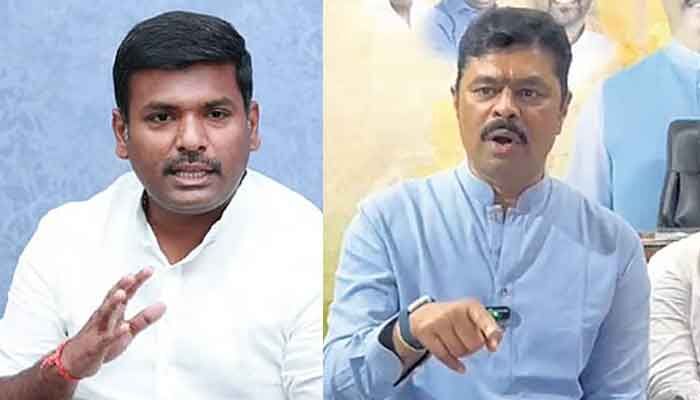
Former Andhra Pradesh minister Gudivada Amarnath has thrown an open challenge to Anakapalli MP C.M. Ramesh, asking him to resign and contest an election against him. Amarnath’s strong remarks have sparked discussion about his political confidence, his personal influence in Anakapalli and the rivalry between the two leaders. The challenge has also raised questions about how the political equation might change if they were to face each other in a direct electoral contest.
In his response to C.M. Ramesh, Amarnath emphasised that his family has a long history in politics and is well known to people in the region. He also criticised Ramesh, alleging that his political rise was supported by business interests and contracts.
Through these remarks, Amarnath appeared keen to underline his independent political identity and family background rather than rely solely on his association with the YSR Congress Party (YSRCP) and its leader, Y.S. Jagan Mohan Reddy.
His statements have prompted speculation about whether he is attempting to rebuild his public image and establish a stronger identity of his own. However, there has been no confirmed indication that he intends to leave the YSRCP.
Amarnath’s political journey has been closely associated with the YSRCP leadership. Critics have argued that some of his earlier political statements, particularly his personal criticism of Jana Sena Party leader Pawan Kalyan, may have affected his public image.
Anakapalli has a significant population of voters from the Kapu community, and Pawan Kalyan has considerable political support among sections of the community. Amarnath also belongs to the Kapu community. His past attacks on Pawan Kalyan have therefore become part of the wider political discussion surrounding his image in the region.
Some observers believe that his association with the previous YSRCP government and its political messaging may have influenced public perceptions of him. Whether he can overcome these perceptions will depend on his future political approach, public outreach and engagement with local issues.
During the YSRCP government, Amarnath held ministerial portfolios related to industries, commerce, infrastructure and information technology. However, critics have questioned whether the state did enough to attract investments and expand industrial opportunities during that period.
Political opponents have also used some of his past remarks about development and comparisons with neighbouring states to criticise him. These controversies have contributed to the debate over his political standing.
Amarnath now faces the challenge of communicating his own record, explaining his political positions and reconnecting with voters beyond party-based campaigning.
Anakapalli MP C.M. Ramesh has also faced criticism from YSRCP leaders over alleged irregularities in mining activities in the region. Amarnath and other YSRCP leaders have demanded an investigation into the allegations, including those relating to mining at Panchadarla.
Ramesh’s critics claim that the issue has affected his public image. However, these are allegations made by political opponents and should not be treated as established wrongdoing without the findings of an independent investigation or competent authority.
Ramesh is an experienced political figure with organisational and political resources. His ability to manage political challenges, maintain alliances and engage with voters will be relevant to his standing in Anakapalli.
The possibility of a direct contest between Gudivada Amarnath and C.M. Ramesh has become a subject of political discussion. However, the outcome of any hypothetical election cannot be determined from their public statements alone.
Several factors would influence such a contest, including the candidates’ local support, party backing, voter preferences, campaign organisation, alliances and the issues dominating the election.
Amarnath could seek to strengthen his position by highlighting his family’s political background and local connections. At the same time, his association with the YSRCP and the public perception of the party’s previous government could influence how voters assess him.
Ramesh, meanwhile, would have to contend with questions raised by his opponents and demonstrate his connection with local concerns. The effect of these issues on voter behaviour would depend on the circumstances of the election.
One of the biggest challenges for Amarnath may be to establish a political identity that voters associate with his own work, positions and public engagement. Rather than allowing past controversies to define his image, he could seek to focus on local development, employment, industry, infrastructure and other concerns affecting residents.
His local connections may be an advantage in political communication, but they do not automatically translate into electoral support. Sustained public engagement and the ability to respond to local issues would be important in determining his political future.
Similarly, Ramesh’s political resources and position as an MP do not guarantee a particular electoral outcome. Any direct contest would depend on the political circumstances at the time.
Gudivada Amarnath’s challenge to C.M. Ramesh has brought their rivalry into sharper focus. His remarks suggest an effort to assert his political standing and defend his background amid criticism from opponents.
Whether the exchange develops into an actual electoral contest remains uncertain. For Amarnath, the key question is whether he can strengthen his public image and demonstrate his political influence through sustained engagement with people. For Ramesh, the challenge will be to respond to criticism and maintain support in his constituency.
Ultimately, the future political equation in Anakapalli will depend not only on the leaders’ statements but also on their public record, local issues, party organisation and voters’ choices.