

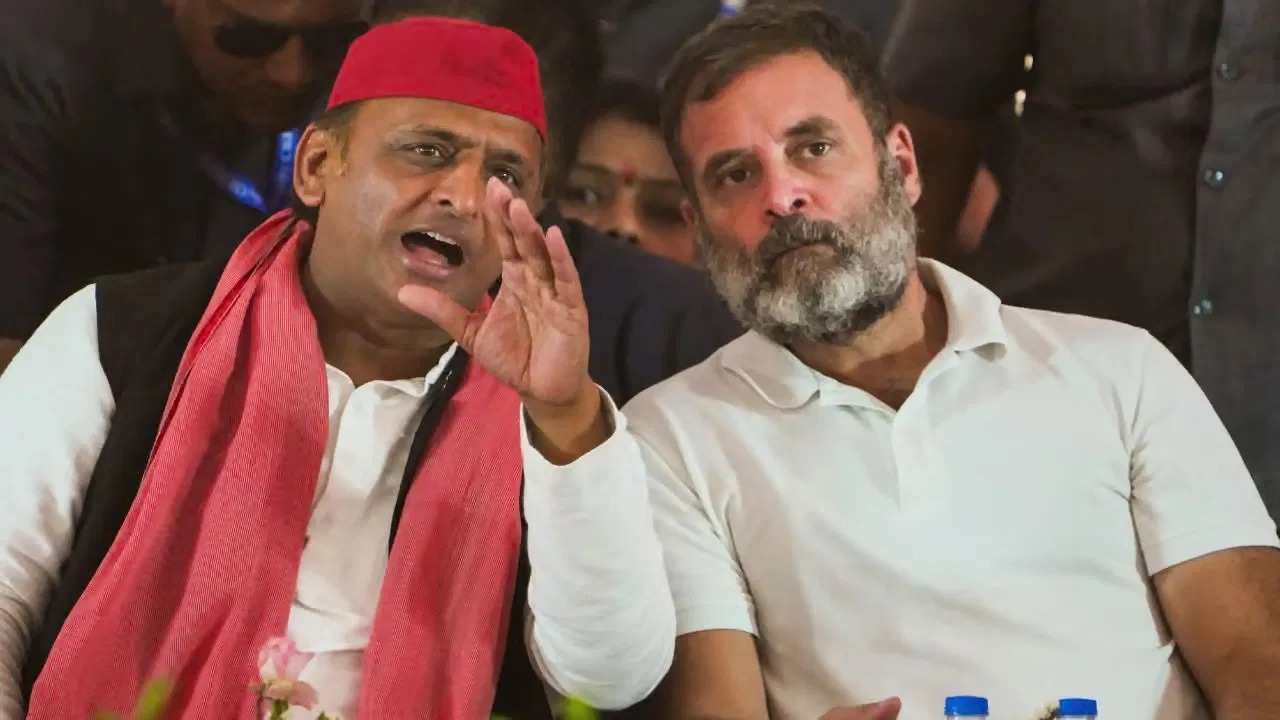
Differences between the Congress and the Samajwadi Party (SP), both key partners in the INDIA alliance, are becoming increasingly serious over seat-sharing arrangements for the upcoming Uttar Pradesh Assembly elections. Despite holding two rounds of discussions in Delhi, the parties have failed to reach a clear understanding on the distribution of constituencies. The disagreement has raised questions about the future of their alliance, particularly at a time when both parties are preparing strategies to challenge the BJP in the state.
Initially, the Congress demanded 181 Assembly seats. However, it later revised its demand and submitted a list of 130 constituencies to Samajwadi Party leaders for consideration. The SP, in response, reportedly showed interest in offering only 26 seats to the Congress. SP spokesperson Rajiv Rai revealed that the proposed 26 constituencies included the two seats won by the Congress in the 2022 Assembly elections, four constituencies where the party had finished in second place, and another 20 seats selected by the Samajwadi Party.
The Congress has expressed strong dissatisfaction with the SP’s proposal, particularly over the limited number of seats being offered. Congress MP Imran Masood launched a sharp attack on the Samajwadi Party’s approach, making it clear that his party was not dependent on anyone for electoral opportunities. His remarks came after the SP announced its first list of candidates for five constituencies even while seat-sharing negotiations with the Congress were still underway. Reacting strongly, Masood said that Congress leaders were not beggars waiting for Akhilesh Yadav’s support.
The five constituencies announced by the SP in its first candidate list include Shamli, Amroha, Lalitpur, Behat in Saharanpur district and Saharanpur Rural. The announcement has become a major point of contention because the Congress is particularly interested in contesting the Behat and Saharanpur Rural constituencies. Imran Masood questioned the SP’s decision to announce candidates unilaterally while alliance discussions were still in progress. He demanded clarity on whether the Samajwadi Party’s political battle was primarily against the BJP or whether it was also positioning itself against the Congress. Masood further stated that Congress workers would continue working at the grassroots level under the guidance of Rahul Gandhi and Priyanka Gandhi Vadra. He made it clear that Congress candidates would contest from constituencies where the party believes it has a strong presence and electoral prospects.
Meanwhile, Samajwadi Party chief Akhilesh Yadav has maintained that the seat-sharing arrangement will be based on the winning prospects of candidates in Uttar Pradesh, which has a total of 403 Assembly constituencies. According to him, discussions have initially focused on 26 constituencies where the alliance believes it has a reasonable chance of winning. He expressed confidence that the two parties would eventually reach a mutually acceptable agreement through further discussions and understanding.
The current disagreement has also brought attention to the previous electoral experience of the two parties. In the 2017 Uttar Pradesh Assembly elections, the Samajwadi Party and Congress contested together. However, the Congress managed to win only seven seats, while the SP secured 47 seats. Despite that setback, the two parties have once again come together as part of the broader INDIA alliance with the objective of strengthening their position against the BJP.
With both parties aiming to improve their electoral performance in Uttar Pradesh, resolving the seat-sharing dispute has become an important challenge. The Congress is seeking a larger share of constituencies, while the Samajwadi Party appears keen to retain control over its preferred seats based on its assessment of electoral prospects. The announcement of candidates before the completion of alliance negotiations has further complicated the situation. Whether the two parties can overcome their differences and arrive at a mutually acceptable seat-sharing formula in the coming days remains a key political question ahead of the Uttar Pradesh Assembly elections.