

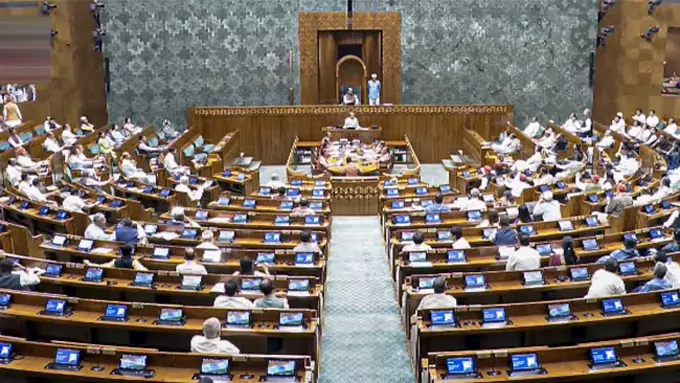
The issue of constitutional amendment bills is set to become a major talking point once again during the upcoming Winter Session of Parliament. The session, scheduled to begin on November 30, is expected to witness renewed discussions on the proposed Delimitation Bill and the Women’s Reservation Bill. However, given the current numerical strength in the Lok Sabha, securing the required majority for the proposed constitutional amendments may not be an easy task for the NDA government.
At present, the Lok Sabha has 540 members. According to the constitutional amendment procedure, such bills require the support of at least two-thirds of the members present and voting. Based on the figures currently being discussed, the required support is estimated at around 360 votes. The NDA is believed to have the backing of approximately 320 MPs. This means the ruling alliance may need the support of at least 40 additional MPs to get the bill passed.
The government appears to have three major political possibilities to overcome this challenge. Even if the DMK, NCP (Sharadchandra Pawar faction), and YSR Congress Party (YSRCP) support the proposed bill, the total strength would reportedly reach only 354 votes, leaving the NDA short by another six votes.
Another possibility involves some opposition members remaining absent during the voting process. If members from parties such as the DMK or NCP stay away from the House, the total number of members present and voting could decrease, potentially lowering the required two-thirds majority. However, even under this scenario, the NDA could still face a shortfall of around 14 to 16 votes, according to the calculations mentioned in the report.
The earlier setback during the voting held on April 17, when the bill reportedly failed to secure the required 352 votes, continues to remain a challenge for the NDA. The experience has made the upcoming parliamentary session particularly important for the government.
Now, all eyes are on the strategy that the Narendra Modi-led government will adopt to secure the necessary numbers. How the ruling alliance approaches regional parties, builds consensus, and persuades additional MPs to support the proposed amendments will be crucial.
With the Winter Session approaching, the proposed constitutional amendments are once again drawing national political attention. The government’s ability to manage parliamentary numbers and gain support beyond its alliance could determine the future course of these bills.