

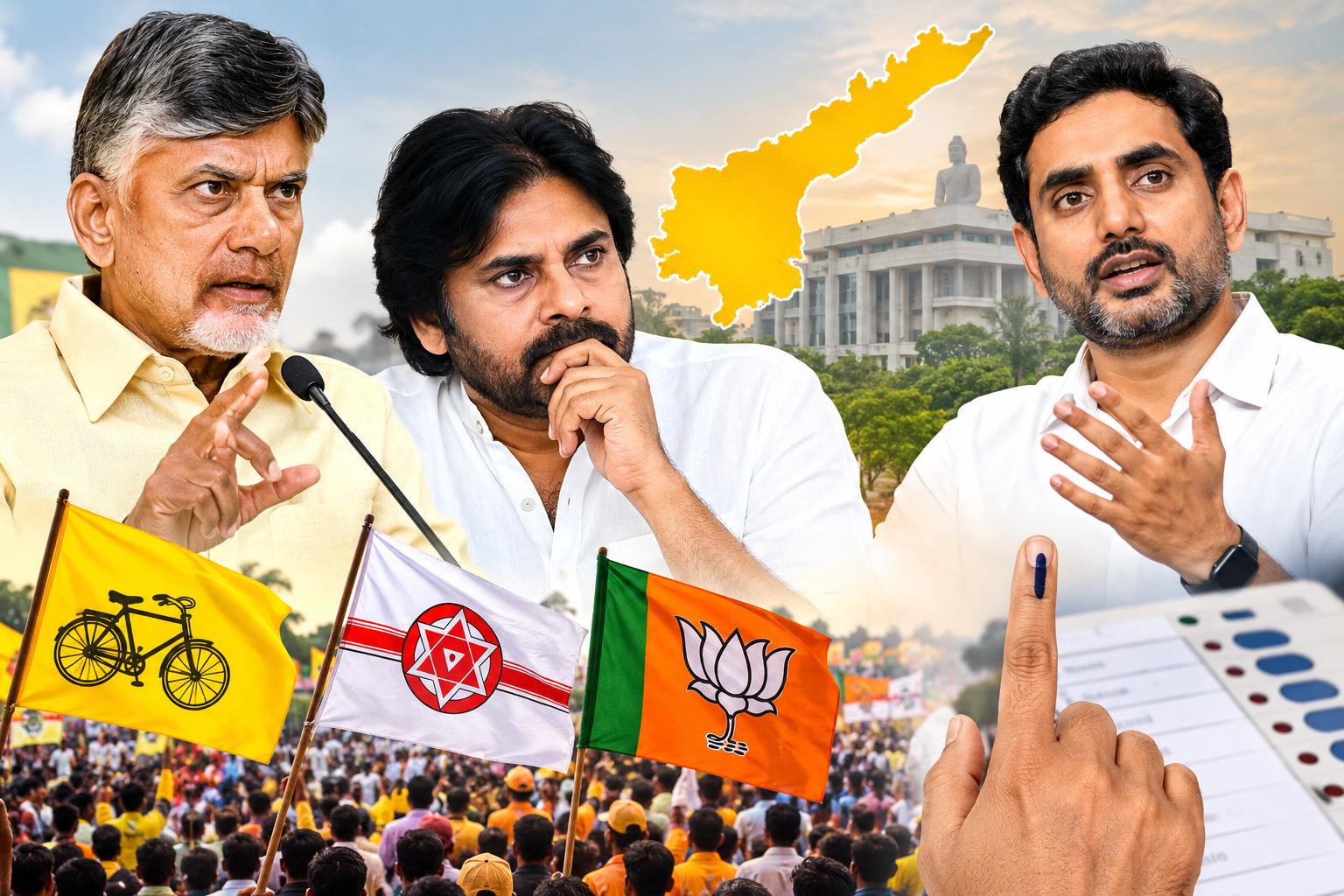
A political survey reportedly conducted by Chanakya Strategies across all 175 Assembly constituencies over the past two months has analysed public opinion on the Andhra Pradesh coalition government and its functioning. The survey notes that the TDP-Jana Sena-BJP alliance won 164 of 175 seats in the 2024 Assembly elections, while the YSRCP won 11. It says the coalition government has completed 27 months and local body elections are expected soon.
According to the survey, the coalition government’s welfare schemes, including free bus travel for women, Thalliki Vandanam, Annadata Sukhibhava, the job calendar and increased pensions, are being implemented. However, it claims that coalition leaders and grassroots workers have not effectively communicated these schemes to the public.
The survey says Chief Minister N. Chandrababu Naidu continues to enjoy public trust, while there is dissatisfaction in some constituencies over local MLAs, MPs and other public representatives. It mentions allegations of corruption, land encroachments and illegal activities against some representatives. These are survey-based claims and have not been independently established.
On development, the survey highlights Amaravati works and irrigation projects such as Veligonda, Polavaram Left Canal and projects supplying water to Kuppam and Pulivendula. However, it says the government needs to provide more regular updates on investment projects and industrial developments.
The survey also discusses coordination issues among TDP, Jana Sena and BJP leaders. It claims that the induction of some YSRCP leaders into Jana Sena has caused concern among local coalition leaders and could create differences during local body elections. Another issue highlighted is dissatisfaction among some senior TDP leaders over their perceived lack of importance. The survey also refers to speculation about differences between Nara Lokesh and senior leaders.
The survey further discusses rumours about differences between Pawan Kalyan and Lokesh. It says such speculation is affecting the coalition cadre and suggests that the two leaders should participate in more joint programmes to strengthen confidence among party workers. Overall, the survey focuses on welfare implementation, public perception, development, grassroots communication and coordination among coalition partners. Its claims represent the survey’s reported assessment and should not be treated as independently verified findings.